INDEPENDENT HARDWARE STUDIO · SHENZHEN

Your Hardware Idea Deserves to Be Real.

I'm an electronics engineer with over 20 years of experience in microcontroller design. From my small workshop in Shenzhen, I help people around the world turn ideas into working hardware.

AI makes hardware creation accessible. I help make it real.

Hands-on microcontroller & circuit design
20+ yrs
Independent bench in the hardware ecosystem
Shenzhen
Single working prototypes welcome
From qty 1
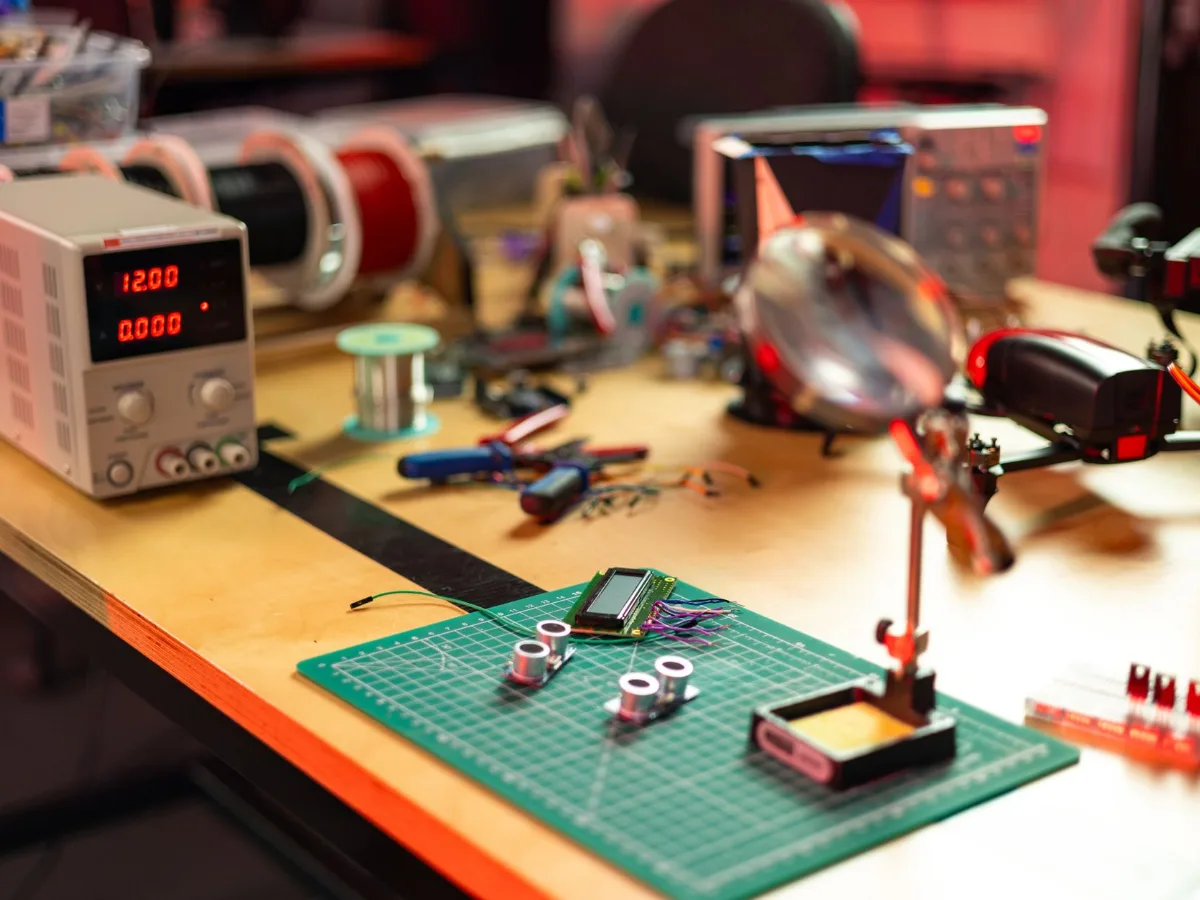
PROTOTYPE WORKBENCH Electronics workbench with a regulated DC bench power supply, oscilloscope, soldering tools, and microcontroller sensor modules on a green ESD mat
Bench instruments for prototype bring-up: regulated DC supply, oscilloscope, soldering tools, and sensor test modules.

WHO THIS IS FOR

You Don't Have to Be an Engineer.

You don't need a formal specification, a complete schematic, or fluency in electronics jargon to reach out. Most conversations begin with a simple idea, a rough sketch, an AI chat transcript, an Arduino breadboard, or a first PCB that isn't behaving yet.

01 Concept & Feasibility

I Have an Idea

You know what you want a physical device to sense, control, or do—even if all you have right now is a plain-English description or a notebook sketch. We can talk through whether it's practical and what a realistic first prototype looks like.

02 AI Design Review

I Built Something with AI

You used ChatGPT, Claude, or AI hardware tools to draft a circuit, parts list, or firmware, and want an experienced human engineer to check pin assignments, power rails, protection, and manufacturability before ordering hardware.

03 Debugging & Rescue

My Prototype Doesn't Work

Your Arduino, ESP32, or STM32 setup works inconsistently on the desk—or your first custom board won't boot, resets under load, or drops sensor readings. I help isolate hardware vs. firmware root causes and fix them cleanly.

04 Breadboard to PCB

I Want a Real PCB

You proved your concept with development boards, breakout modules, and jumper wires, and now want a compact, reliable custom circuit board designed, assembled, and bench-tested.

WHAT I CAN HELP WITH

Practical Engineering Across the Prototype Bench.

Focused on microcontroller-based electronics—from checking early schematics to bringing up assembled prototype boards. Every project is scoped individually based on what actually needs engineering.

Microcontroller Design

Selecting and designing around practical 8-bit and 32-bit MCUs—including STM32, ESP32, ARM Cortex-M, and classic industrial microcontrollers—matched to your power, I/O, connectivity, and cost needs.

STM32 · ESP32 · Cortex-M · 8/32-bit MCUs

Circuit & PCB Design

Schematic capture, clean power regulation, sensor and actuator conditioning, ESD/reverse-polarity protection, and 2-layer to multi-layer PCB layout prepared with manufacturing rules in mind.

Schematic · Stackup · Altium / PADS / Allegro

Firmware Development

Clear, maintainable C/C++ embedded code for board bring-up, peripheral buses (I2C, SPI, UART, RS-485, CAN, ADC/PWM), low-power sleep states, and reliable hardware verification.

Board Bring-Up · Bare-Metal / RTOS · Drivers

Prototype Debugging

Hands-on diagnosis using an oscilloscope, logic analyzer, and bench power supply—tracking down brown-outs, noisy rails, timing glitches, boot strapping mistakes, and intermittent faults.

Root-Cause Analysis · Signal & Power Integrity

Component Selection

Reviewing and choosing real, obtainable parts within Shenzhen's electronics ecosystem—avoiding obsolete chips, counterfeit traps, or overly exotic parts when straightforward components work better.

BOM Review · Practical Substitutes

Small-Batch Prototyping

Coordinating bare-board fabrication, stencil/SMT or hand assembly, firmware flashing, and bench testing in Shenzhen for 1 prototype or a small pilot run—evaluated case by case.

1 Piece to Small Pilot Runs

Need something outside pure electronics—such as complex mechanical tooling or formal regulatory lab testing? We evaluate those boundaries up front before you commit.

Explore What I Do in Detail →

HOW WE WORK

Four Clear Steps, Starting with an Honest Look.

No opaque agency layers or high-pressure sales calls. You communicate directly with the engineer doing the technical work.

  1. Tell Me Your Idea

    Send a short message describing what you want to build, what stage it is in, and where you feel stuck. Plain language, photos, sketches, or AI notes are all welcome.

  2. Let's Check What's Possible

    We discuss technical feasibility, key trade-offs, and open questions first. Concrete technical scope, estimated cost, timeline, and deliverables are defined after this project evaluation.

  3. Design, Build & Test

    Depending on the agreed scope, I work through circuit design, PCB layout, component preparation, prototype assembly, firmware bring-up, and real bench testing in Shenzhen.

  4. Get Your Working Prototype

    You receive verified design files, test notes, and/or bench-tested prototype hardware—along with straightforward engineering feedback on what worked and what to watch next.

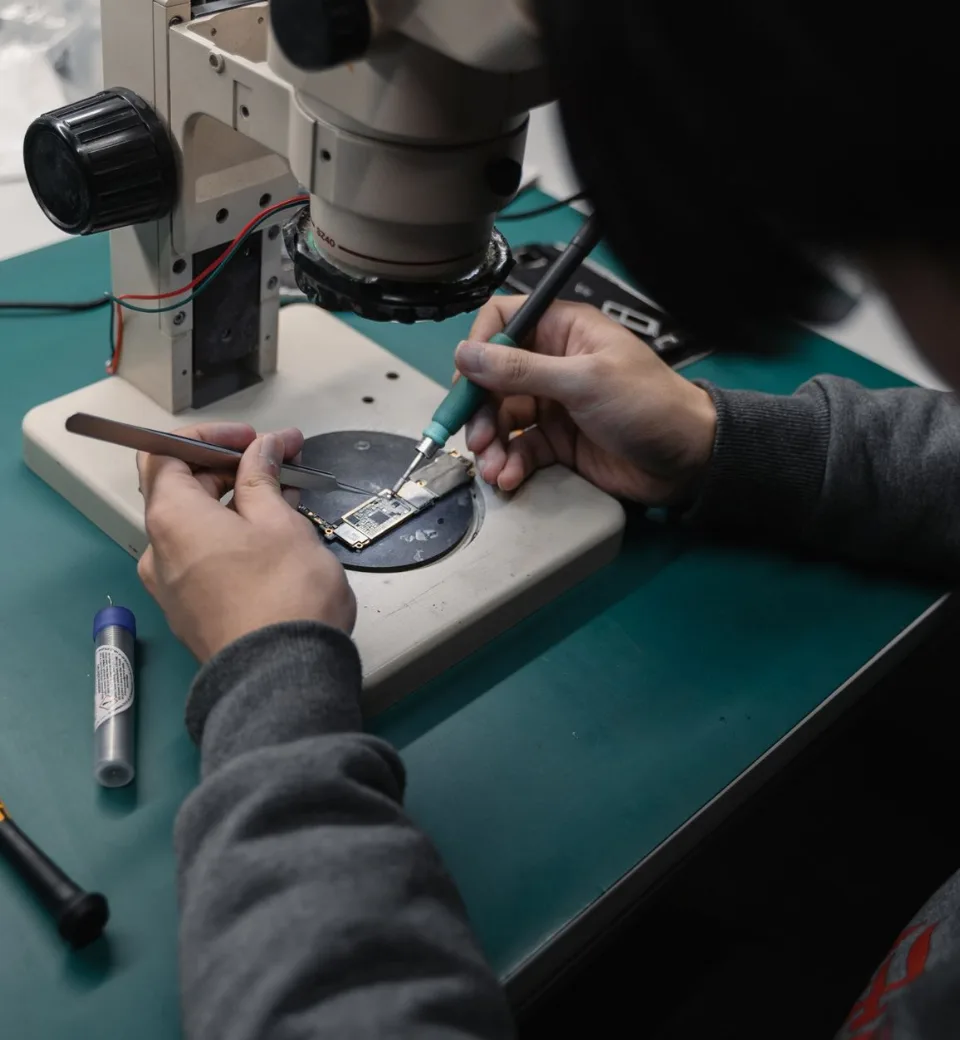
HANDS-ON BENCH WORK Electronics engineer inspecting and reworking a fine-pitch circuit board under a stereo microscope on a green anti-static mat
Fine-pitch SMD inspection and rework under a stereo microscope on an anti-static workbench.

ABOUT THE ENGINEER · The Engineer Behind IC88

20+ Years of Building Things That Work.

For more than twenty years, my daily work has revolved around microcontrollers, schematics, circuit boards, and the moment of truth when power is applied to a new prototype for the first time.

Working independently from a small workshop in Shenzhen puts me right beside the world's fastest PCB fabs and component channels—without the minimum-order walls or impersonal layers of a large factory. I enjoy working directly with makers, independent founders, and curious beginners who care deeply about an idea.

AI has opened the door for non-engineers to sketch circuits, write starter code, and explore hardware concepts faster than ever. That is genuinely exciting—and it makes experienced, grounded human engineering review even more valuable when turning a digital draft into reliable physical hardware.
SELECTED PROJECTS · FROM MY WORKBENCH

From My Workbench

Client hardware stays private unless explicitly cleared to share. Below are representative workbench reference studies illustrating typical MCU, power, and PCB problems solved in the studio.

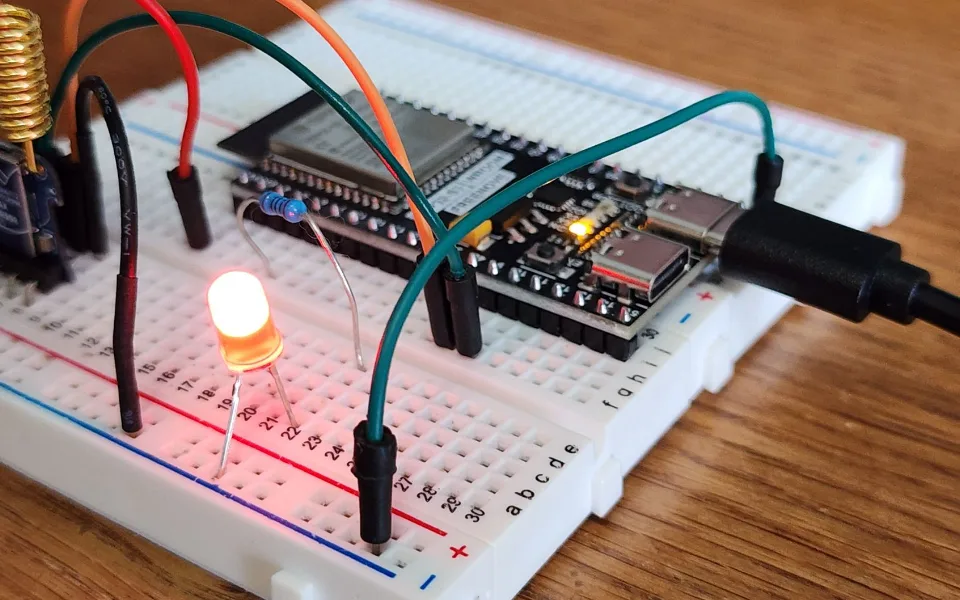
Workbench Reference Study ESP32 microcontroller module wired on a solderless breadboard with RF coil antenna, jumper leads, and glowing indicator LED

Breadboard Modules to Compact Custom MCU Board

Problem: Jumper-wired dev boards and sensor breakouts work briefly on a desk, but loose connectors, shared ground loops, and unregulated 5V/3.3V rails fail as soon as the prototype is moved or enclosed.

Bench Outcome: Consolidated single-board schematic and compact PCB layout with reverse-polarity protection, clean LDO/buck regulation, SWD/UART debug headers, and labeled test points ready for first-spin bench bring-up.

  • ESP32 / STM32
  • Power Regulation
  • 2/4-Layer PCB
  • DFM & Bring-Up
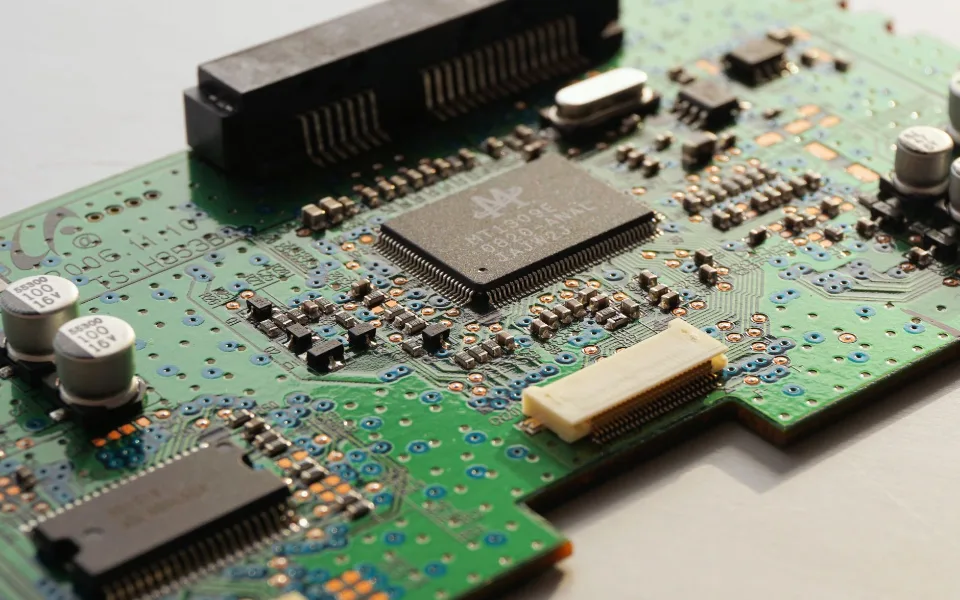
Workbench Reference Study Close-up of a green multi-layer printed circuit board featuring a QFP microcontroller IC, crystal oscillator, decoupling capacitors, and SMD connectors

Pre-Fab Audit for AI-Drafted MCU Schematics

Problem: AI assistants help non-engineers generate starter schematics and BOMs rapidly, yet often assign incompatible boot pins, omit MOSFET gate/flyback networks, or pair mismatched IC package footprints.

Bench Outcome: Annotated pre-fabrication checklist catching pin-mux conflicts, thermal bottlenecks, and unobtainable part numbers before spending time and money on dead first-spin boards.

  • AI Schematic Review
  • Pin-Mux & Boot Check
  • BOM Verification
  • Protection Circuits
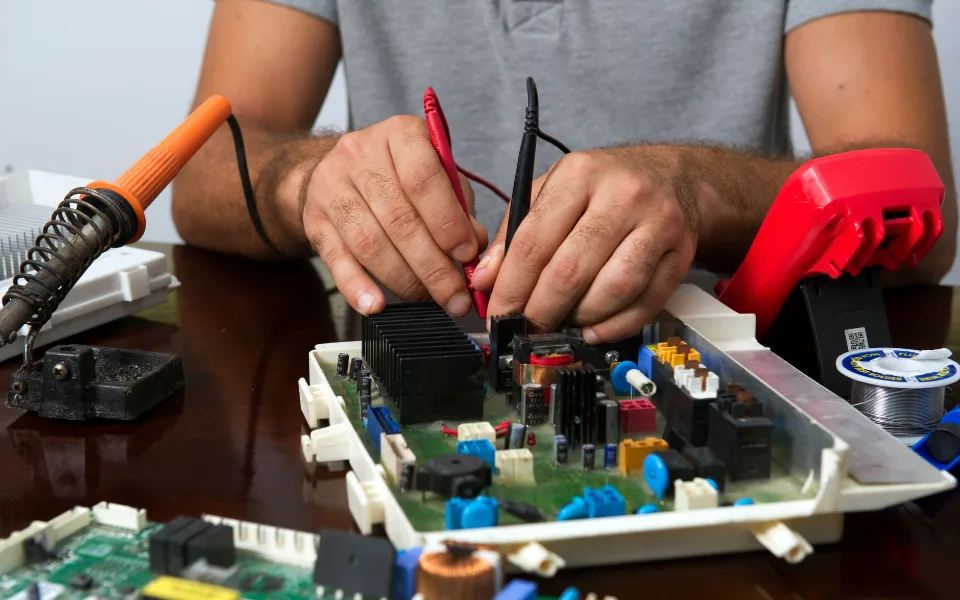
Workbench Reference Study Engineer probing a power and control circuit board with red and black test leads beside a soldering station and digital multimeter

Mixed-Signal Sensor & Bus Stability Bring-Up

Problem: Custom MCU boards driving relays, motors, LEDs, or long sensor cables frequently suffer from erratic resets, noisy analog readings, or dropped serial packets under real load.

Bench Outcome: Scope-verified power decoupling, return-path separation, transient suppression, and deterministic firmware bus-recovery handling.

  • Oscilloscope Debug
  • Signal & Power Integrity
  • RS-485 / I2C / SPI
  • C/C++ Firmware

ENGINEERING JOURNAL

Practical Notes on MCUs, PCBs & Assembly

Articles and field notes from the IC88 archive covering microcontroller trends, practical PCB layout lessons, multi-layer stackups, and surface-mount fundamentals.

20 Years in PCB Design: Lessons You Won’t Find in Textbooks

Introduction: Experience is the Best Teacher in PCB Design After two decades in the PCB design industry, I can confidently say that true expertise doesn’t come from textbooks—it comes from trial, error, and real-world problem-solving. Designing PCBs isn’t just about connecting circuits correctly; it’s about ensuring reliability, efficiency, and manufacturability. If you’re new to PCB design or even an experienced engineer looking to refine your skills, here are the hard-earned lessons I wish I had known earlier....

2025 Microcontroller Trends: The Future of Embedded Systems

Introduction: The Evolution of Microcontroller Technology If you think microcontrollers (MCUs) are just simple chips for basic automation, you’re missing the bigger picture. MCUs are the brains behind everything—from IoT devices and automotive electronics to industrial automation and AI-powered applications. As we step into 2025, MCU technology is evolving faster than ever, bringing higher efficiency, better connectivity, and more computing power to embedded systems. But here’s the real deal: which MCU trends should developers, engineers, and businesses pay attention to? How will these trends reshape industries like consumer electronics, automotive, and industrial automation?...

PCB Stackup Rules: What Every Engineer Should Know

When designing multi-layer PCBs, the stackup isn’t just about layers—it’s about signal integrity, EMC, heat dissipation, and even cost control. Here’s a practical, real-world guide to PCB stackup rules that actually matter in your daily work. 1. What Are PCB Stackup Rules? In simple terms, stackup rules define how each layer in a multi-layer PCB is arranged and what role it plays. Common Layer Types: Signal Layer 🚦: Carries data or control signals. Power Plane 💰: Distributes power across the board. Ground Plane 🌍: Provides a reference and helps suppress noise....

March 28, 2025 · 3 min

Fundamentals of PCB Manufacturing: Definition and Classification

Printed Circuit Boards (PCBs) are the backbone of modern electronics. From consumer gadgets to industrial machinery and high-tech military applications, PCBs enable the functionality of almost every electronic device. Understanding the types, materials, and classification of PCBs is essential for manufacturers, designers, and engineers who work in the electronics industry. This article provides a comprehensive breakdown of PCB manufacturing, covering definitions, classifications, material choices, and emerging trends in PCB technology....

QUESTIONS & ANSWERS

Questions First-Time Hardware Creators Ask.

Straightforward answers on starting small, reviewing AI-drafted designs, single prototypes, pricing stages, and working together across time zones.

Can I start with just an idea?

Yes. You don't need a schematic, CAD file, or technical specification to start talking. Tell me in plain English what you want the device to do, how it would be used, and any size or battery expectations. I'll help you understand what is realistic, where the tricky parts are, and what a sensible first step looks like.

Can you review a circuit designed with AI?

Absolutely—that has become one of the most helpful ways we can work together. AI tools make it much easier to draft ideas, parts lists, and starter code, but they frequently hallucinate pin functions, miss voltage-regulator thermal limits, or skip protection components. I can review your AI-assisted schematic, BOM, or code and give you practical, human engineering feedback before you order boards.

Do I need to know electronics?

No. Many people I talk with come from software, industrial design, crafts, research, or completely non-technical backgrounds. My job is to translate electronics constraints—power, microcontrollers, sensors, connectors—into clear trade-offs you can actually decide on, without burying you in jargon.

Can you help with a single prototype?

Yes—1 piece is completely welcome. Because IC88 is a personal independent workshop rather than a high-volume factory, there is no 500-unit minimum order requirement. Whether you want design review only, a single bench-tested custom PCB, or 3–10 boards to test with early users, we can scope around that.

How are project costs determined?

After an initial look at what you're building, I break the work into clear, concrete stages—such as design review, schematic & PCB layout, firmware bring-up, or physical prototype assembly—so you know the scope, deliverables, and cost before committing to each step. Hardware parts, PCB fab, and shipping are kept transparent and separate from engineering time.

Can we work together if I live outside China?

Yes. Written communication in English via email or WeChat works smoothly across time zones (I'm based in Shenzhen, UTC+8). During development and bench testing, I share clear written updates, schematic/layout snapshots, and photos from the workbench so you always see real progress before anything ships internationally.

START A CONVERSATION

Have an Idea? Let's Talk About It.

Tell me what you're trying to build, what you've tried so far, and where you're stuck.

Direct personal replies from Shenzhen (UTC+8). Single-prototype questions and early ideas are welcome.