SELECTED PROJECTS & BENCH NOTES

From My Workbench

Client hardware designs remain confidential unless explicitly approved for public sharing. This section documents representative workbench reference workflows—showing how breadboard concepts, AI-drafted schematics, and noisy prototypes are approached on the bench.

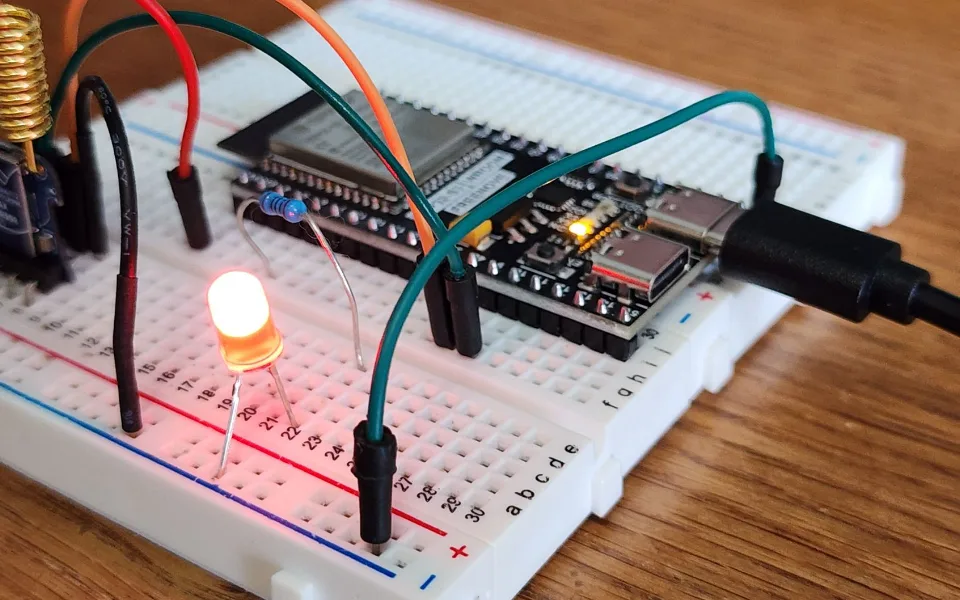
Workbench Reference Study ESP32 microcontroller module wired on a solderless breadboard with RF coil antenna, jumper leads, and glowing indicator LED

Breadboard Modules to Compact Custom MCU Board

Problem: Jumper-wired dev boards and sensor breakouts work briefly on a desk, but loose connectors, shared ground loops, and unregulated 5V/3.3V rails fail as soon as the prototype is moved or enclosed.

Bench Outcome: Consolidated single-board schematic and compact PCB layout with reverse-polarity protection, clean LDO/buck regulation, SWD/UART debug headers, and labeled test points ready for first-spin bench bring-up.

  • ESP32 / STM32
  • Power Regulation
  • 2/4-Layer PCB
  • DFM & Bring-Up
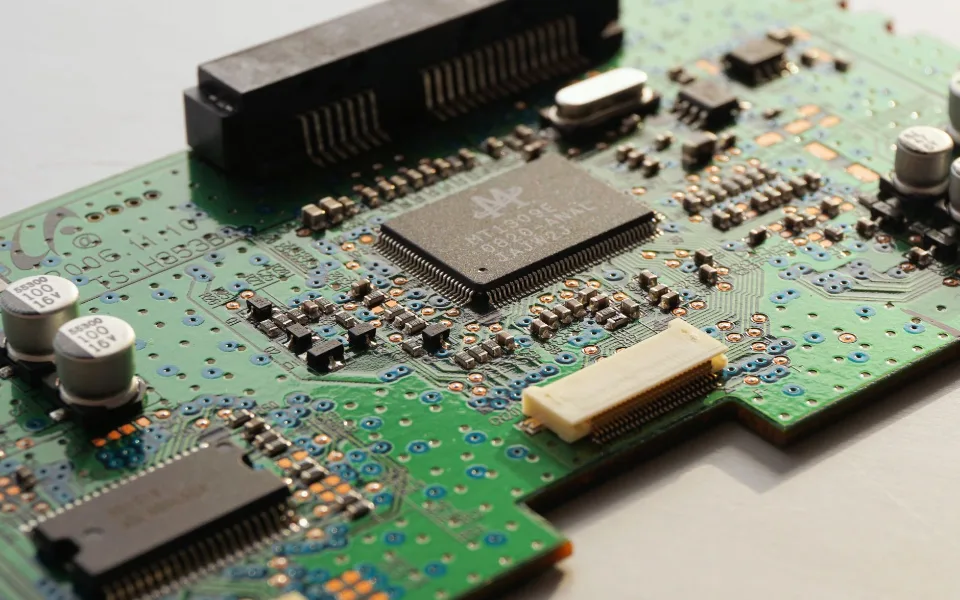
Workbench Reference Study Close-up of a green multi-layer printed circuit board featuring a QFP microcontroller IC, crystal oscillator, decoupling capacitors, and SMD connectors

Pre-Fab Audit for AI-Drafted MCU Schematics

Problem: AI assistants help non-engineers generate starter schematics and BOMs rapidly, yet often assign incompatible boot pins, omit MOSFET gate/flyback networks, or pair mismatched IC package footprints.

Bench Outcome: Annotated pre-fabrication checklist catching pin-mux conflicts, thermal bottlenecks, and unobtainable part numbers before spending time and money on dead first-spin boards.

  • AI Schematic Review
  • Pin-Mux & Boot Check
  • BOM Verification
  • Protection Circuits
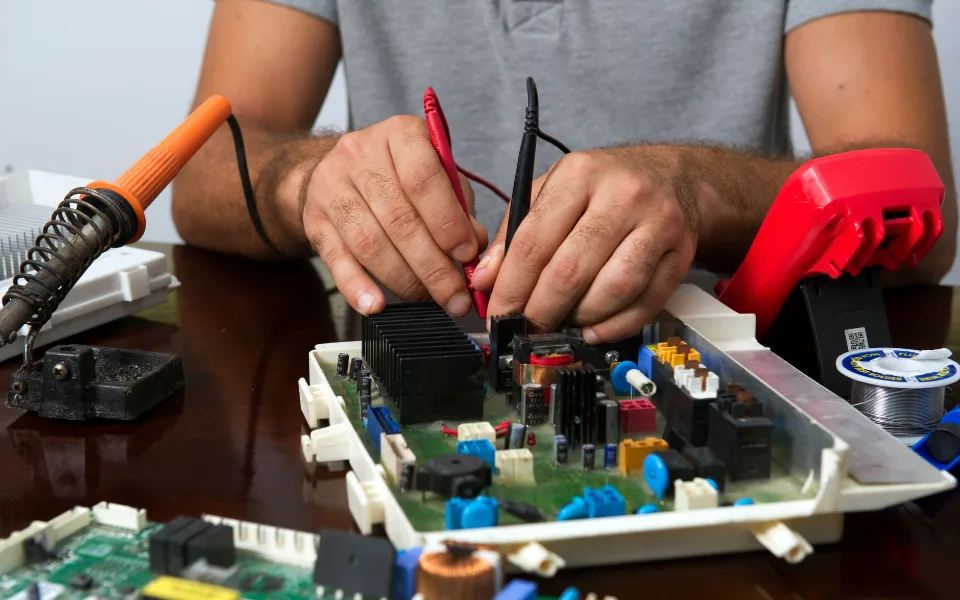
Workbench Reference Study Engineer probing a power and control circuit board with red and black test leads beside a soldering station and digital multimeter

Mixed-Signal Sensor & Bus Stability Bring-Up

Problem: Custom MCU boards driving relays, motors, LEDs, or long sensor cables frequently suffer from erratic resets, noisy analog readings, or dropped serial packets under real load.

Bench Outcome: Scope-verified power decoupling, return-path separation, transient suppression, and deterministic firmware bus-recovery handling.

  • Oscilloscope Debug
  • Signal & Power Integrity
  • RS-485 / I2C / SPI
  • C/C++ Firmware

Working on Something Similar?

Every project begins with a straightforward look at what you have and what it takes to get a reliable prototype running.