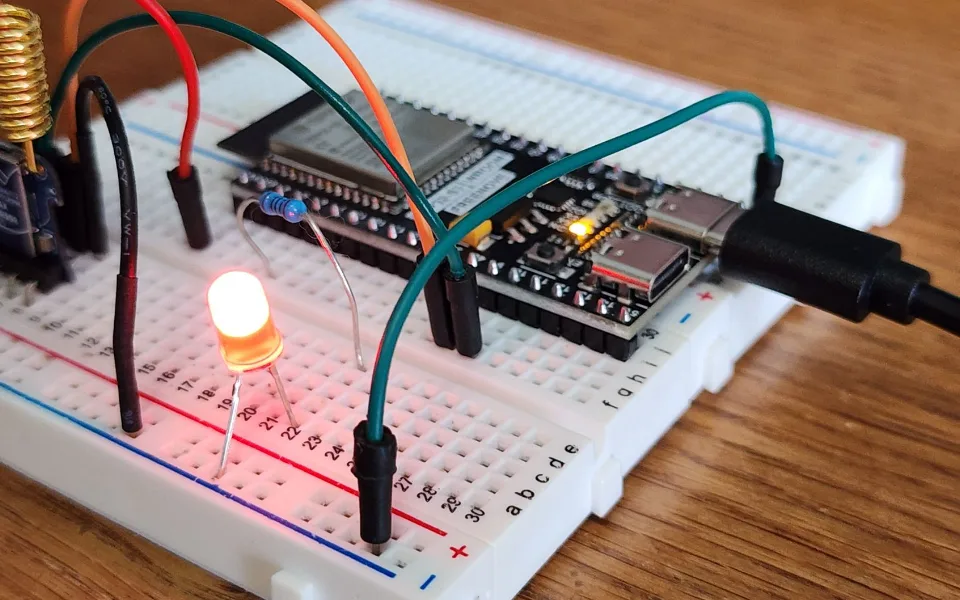
Why Breadboard Prototypes Stall Before Becoming Real Hardware
Many creator projects start with an Arduino, ESP32, or STM32 Nucleo board wired to three or four breakout modules. That is a great way to prove an idea—until loose Dupont jumpers, missing bulk capacitance, or conflicting pull-up resistors make the device impossible to put inside an enclosure.
Typical Bench Workflow
- Subsystem Audit: Identify what actually needs to live on the custom board versus which connectors, buttons, or displays plug in externally.
- Power & Protection Cleanup: Replace fragile USB-only module chaining with a properly rated input stage, ESD/reverse-polarity protection, and low-noise 3.3V regulation.
- Debuggable Layout: Route solid ground return paths and expose clearly labeled
GND,3V3, programming, and bus test pads so bring-up with an oscilloscope takes minutes rather than guesswork. - First-Spin Verification: Assemble 1–5 boards locally, verify rail voltages before MCU power-up, and validate each sensor/actuator channel systematically.